

A compressor suited to continuous production is selected from measured airflow, pressure at the point of use, duty pattern, air-quality requirements and heat load—not motor horsepower or tank size. By the end, you will be able to compare compressor designs, size a reliable system, calculate lifecycle cost and specify the evidence a supplier must provide.
Key takeaways
- Measure loaded time, unloaded time, duty cycle and starts per hour.
- Match compressor capacity to measured demand, not total connected horsepower.
- Specify pressure, air quality and piping together with the process.
- Test performance during peak demand before accepting the installation.
What Does Continuous Compressor Operation Really Mean?
Continuous operation definition starts with the schedule, not the compressor label: record running hours per shift, loaded and unloaded time, duty cycle, and starts per hour. A compressor running 16 hours but unloading through demand troughs has a different duty pattern from one loaded for nearly every minute.
Measure the plant before selecting capacity:
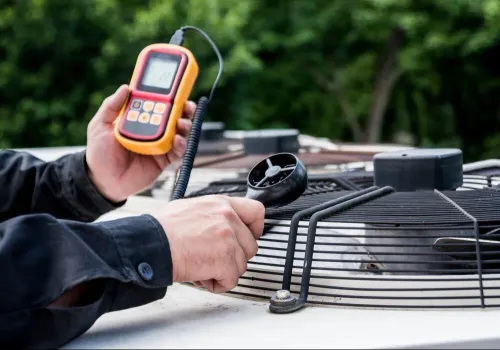
- Install a temporary flow logger and pressure recorder for representative production days, including start-up, breaks, cleaning and shift change.
- Record minimum, average and maximum flow, pressure at the compressor outlet, and pressure at the most remote high-demand point.
- Mark intermittent tools, blow-off nozzles and processes that operate together; do not add every nameplate flow, because that commonly overstates demand.
- Perform an ultrasonic leak survey during production, estimate leakage by flow and operating hours, repair the largest losses, then measure again.
- Note compressor loaded hours, unloaded hours and starts per hour. Frequent cycling indicates a control or receiver problem, not automatically a need for a larger compressor.
| Pattern | What the measurements show | Equipment implication |
|---|---|---|
| Steady demand | Flow stays near the average | Match usable FAD to sustained demand |
| Peaky demand | Short, high flow spikes | Use receiver volume for brief peaks |
| Intermittent demand | Long idle periods and frequent starts | Review sequencing and cycling control |
| Continuous deficit | Demand remains above delivered flow | Increase capacity; a receiver cannot create continuous airflow |
Pressure must be checked while production runs. Raising discharge pressure to mask piping losses increases energy use and hides the real restriction.
Which Compressor Design and Capacity Strategy Fits the Demand?
Choose the compressor design by duty pattern, then size capacity from measured free air delivery (FAD), not motor horsepower or the sum of equipment nameplate flows. Log flow and pressure across shifts, including minimum, maximum, unloaded periods and intermittent blow-off.
| Design | Choose it when | Wrong choice when |
|---|---|---|
| Reciprocating piston | Demand is intermittent, pressure is high, and low capital cost matters | Long continuous duty; reciprocating piston limitations include pulsation, noise, heat and frequent cycling |
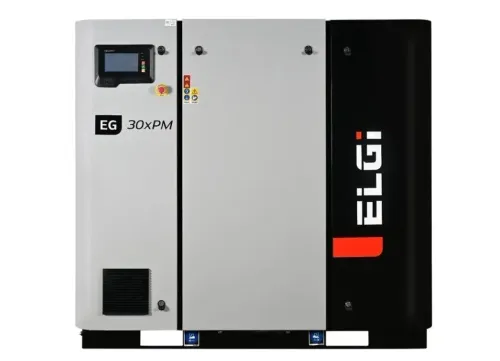
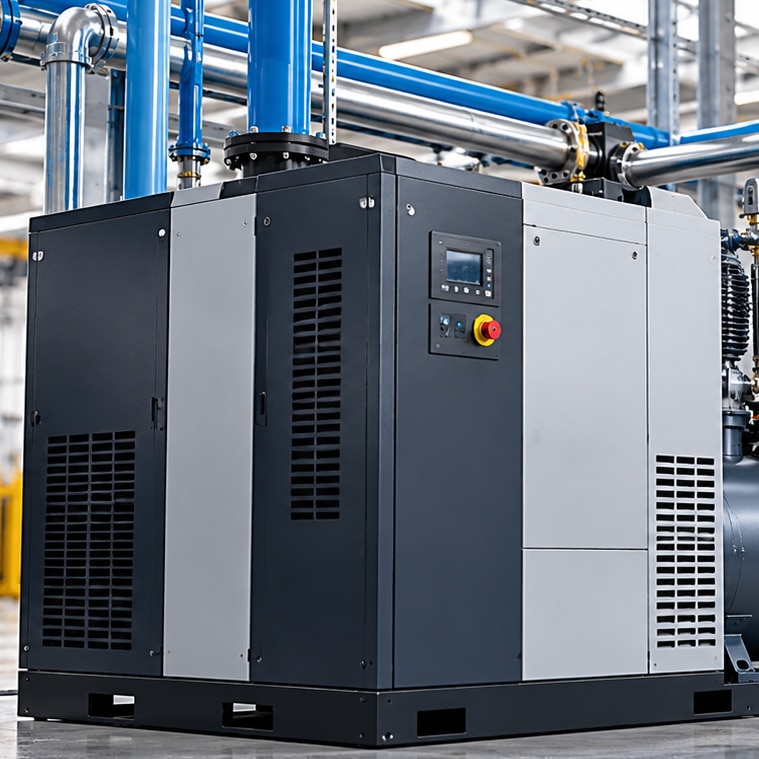
| Rotary screw | Air demand is steady or varies across long shifts; variable-speed control can follow changing load | Very low, clean intermittent demand where part-load energy and maintenance outweigh capacity |
| Scroll compressor | You need quiet, oil-free air for laboratories, clinics or light industrial loads | Large plant flow; multiple small scroll units can consume floor space and complicate sequencing |
| Centrifugal compressor | Demand is very large, continuous and stable, with trained support available | Small or fluctuating systems, where surge risk and poor part-load efficiency become costly |
Select running capacity above measured peak FAD by adding verified leakage and the airflow required for planned expansion. Do not add every connected tool’s rating. Recheck pressure at the remote point during peak demand; raising discharge pressure to hide piping losses increases energy use.
Use wet and dry receivers to absorb short peaks, reduce cycling and provide transition reserve. Receiver volume cannot correct a continuous flow deficit, so use lead-lag controls and an N+1 arrangement when production must continue during maintenance or failure. Include the standby compressor in scheduled test starts.
How Should Pressure, Air Quality and Piping Be Matched to the Process?
Convert each machine’s requirement into free air delivery (FAD) and pressure at the outlet, not compressor horsepower. Displacement is the compressor’s swept volume; it is not the same as FAD, which reflects usable air under stated reference conditions.
1. Measure demand with a flow logger and pressure recorder during production. Use peak, minimum and average FAD, including leaks, blow-off and intermittent tools, rather than adding nameplate flows.
2. Set the pressure target at the most remote or highest-demand connection. Start with the tool’s required inlet pressure, then add losses through the receiver, dryer, filters, regulator, valves and piping. Rated pressure describes the compressor’s specified operating point, not the actual delivered air at point of use.
Raising discharge pressure to hide restrictions wastes energy; each additional 1 psi commonly adds about 0.5% compressor power.
3. Specify air quality at the application using ISO 8573-1 classes for particles, water and oil. Set separate classes for general plant air, instruments, painting, food or pharmaceutical contact, and breathing air. “Oil-free” does not remove the need for filtration, condensate control and verification.
4. Match the dryer to pressure dew point. A refrigerated dryer near +3 °C suits general plant air; desiccant drying near −40 °C suits moisture-sensitive processes but consumes purge air and adds maintenance.
5. Size piping for low velocity and short, direct runs. Use a ring main, slope it to drain points, and monitor filter differential pressure; loaded filters can starve equipment before the compressor gauge shows a problem.
What Installation Conditions Keep a Compressor Reliable for Long Shifts?
A reliable long-shift installation keeps the compressor cool, stable, serviceable and correctly controlled; poor placement turns a sound machine into a failure source. Use a lead-and-lag arrangement to rotate the lead machine, match output to demand and start the next unit before pressure collapses.
Build N+1 redundancy for planned maintenance or one failure, and exercise the standby on a schedule; a machine that never starts is not dependable capacity.
Fixed-speed versus variable-speed drive selection depends on the demand profile. Fixed-speed machines suit steady demand near efficient full load, while VSD control reduces throttling losses when flow changes materially. An oversized VSD unit running at very low output can consume more than correctly sequenced fixed-speed machines.
Compare each machine against these continuous-duty checks:
- Unloaded power and part-load efficiency
- Minimum stable speed and restart frequency
- Oil-temperature control at the site’s highest ambient temperature
- Separator life and stated service intervals
Install intake openings away from dust, rain and hot exhaust, and discharge hot cooling air outdoors. Heat recovery earns its cost only when a nearby, year-round heat load justifies the extra equipment.
Mount the package on a level, rigid foundation with vibration isolators. Align belt drives, set tension to the manufacturer’s specification and guard rotating parts. Leave clear access to filters, separators, drains and electrical panels; manage noise with enclosure treatment that does not restrict ventilation.
Inspect vibration, oil temperature, condensate drainage and service indicators during every continuous-service maintenance round.
How Do You Prove the Best Choice Before Buying and Commissioning?
Compare the purchase on five-year or ten-year lifecycle cost, not horsepower or purchase price. Include electricity cost at measured load, oil and consumables, dryer and filtration energy, planned service labour, heat-recovery equipment, and downtime cost during failures.
| Cost item | Evidence to request | Why it matters |
|---|---|---|
| Electricity | Input kW at full load, modulation, unloaded and minimum stable speed | A machine efficient only at full load can waste power during demand troughs |
| Maintenance | Oil, separator and filter lives; service intervals at site ambient temperature | Shorter intervals increase labour and consumable cost |
| Availability | N+1 configuration, restart limits and breakdown response terms | A nominal spare is useless if it never starts or support arrives late |
Ask SS Quality Air Solutions to attach a duty-based quotation, factory test results, pressure and FAD conditions, electrical data, safety-control descriptions, dryer dew-point data, filtration grades, noise level, warranty exclusions and a parts-availability plan. Reject proposals that provide only displacement or motor size.
Before acceptance, record delivered pressure, FAD, input kW, unloaded power, oil temperature, starts per hour, dryer dew point and filter differential pressure at representative loads. Test alarms, emergency stop, auto-drain operation, lead-lag sequencing, standby takeover and restart after a power interruption.
Use an ultrasonic survey to find leaks during production, repair the highest-loss leaks, and rescan them.
Put oil analysis, separator and filter replacement, cooler cleaning, condensate checks and receiver inspection on a maintenance calendar. Name the breakdown contact, response time, stocked parts and escalation route before commissioning. Recheck performance after the first service interval.
Related product
 | Reciprocating Compressors 3-40 HP SINGLE AND TWO STAGE INDUSTRIAL PISTON COMPRESSORS WHY ELGi's BELT-DRIVEN AIR COMPRESSOR? Robust cast iron air compressor with high durability The belt-driven air compressors from ELGi are made of... View product → |
Frequently asked questions
What does continuous compressor operation really mean?
Assess running hours, loaded and unloaded time, duty cycle and starts per hour. A long shift does not prove continuous loading.
How do you choose compressor design and capacity for continuous demand?
Use measured air demand and loading behaviour to select compressor design and capacity instead of adding up connected equipment ratings.
How should pressure, air quality and piping be matched to the process?
Set pressure from the highest process requirement, define the required air quality, and size piping to deliver that pressure without excessive loss.
What installation conditions support reliable long shifts?
Check ventilation, ambient conditions, access for service, foundations, electrical supply, condensate handling and safe clearance before commissioning.
How can you prove the compressor choice before buying and commissioning?
Compare measured demand with the proposed operating range, specify acceptance checks, and test pressure, flow, air quality and performance during peak demand.