

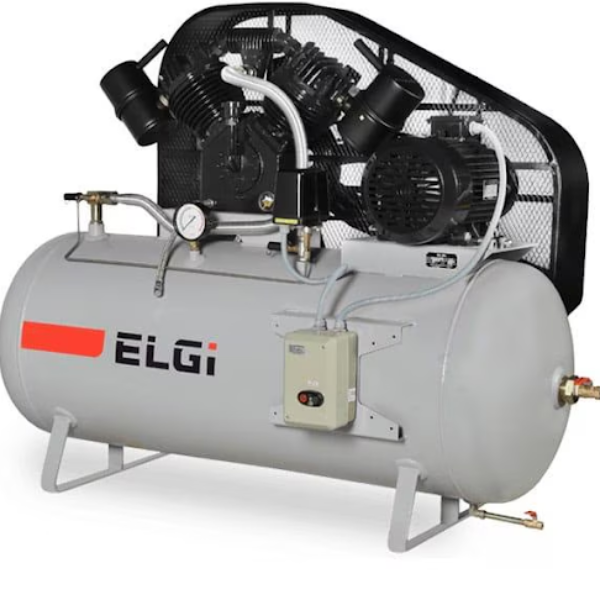
The best air compressor for a factory is not necessarily the largest machine available. A suitable compressor is one that can consistently meet the plant's actual air demand at the required pressure while fitting its operating pattern, air-quality requirements, maintenance capabilities, and future production plans.
For factories in Meerut, these factors are particularly useful when replacing an ageing compressor or planning compressed air for a new production line.
Start With Actual Air Demand
Compressor selection should begin with understanding how much compressed air the facility consumes.
List the machines, tools, cylinders, cleaning points, and other equipment using compressed air. Determine which loads operate continuously and which are intermittent.
Peak demand also matters. Several machines starting simultaneously can create a temporary requirement considerably higher than average consumption.
Selecting equipment solely from the rated capacity of one production machine can therefore lead to inadequate system performance.
Identify the Required Working Pressure
Different industrial equipment may have different pressure requirements.
A compressor should not automatically be operated at unnecessarily high pressure simply because one part of the system performs poorly. Excessive pressure can increase energy use while placing additional demand on system components.
Pressure losses should instead be investigated across filters, dryers, pipelines, valves, fittings, and long distribution routes.
Consider the Operating Pattern
A workshop using compressed air occasionally has different requirements from a factory where air demand remains high throughout multiple shifts.
Before selecting equipment, examine:
- Daily operating hours
- Number of shifts
- Load fluctuations
- Peak production periods
- Seasonal demand
- Standby requirements
- Planned capacity expansion
These details influence compressor type, capacity, control strategy, and whether additional storage may be useful.
Think Beyond the Compressor
The compressor is only one part of the compressed air system.
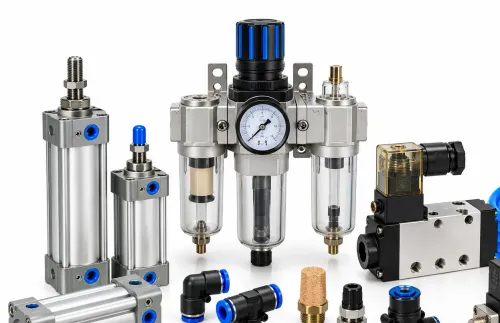
Air receivers can support storage requirements. Dryers help manage moisture according to the application. Filtration can help achieve the required compressed-air quality. Proper piping reduces unnecessary pressure losses.
Ignoring these supporting components can limit the performance of an otherwise correctly selected compressor.
Examine Installation Conditions
The compressor room itself affects equipment performance.
Adequate ventilation is important because compressors generate heat. Maintenance access should also be considered before installation. Placing equipment in an area that makes filters, service points, or major components difficult to access can complicate routine maintenance.
Dust, ambient temperature, electrical supply, drainage, and available floor space should also be reviewed.
Calculate Lifecycle Requirements
Purchase price is only one part of compressor economics.
Industrial buyers should consider electricity consumption, preventive maintenance, spare parts, downtime exposure, expected operating hours, and service accessibility.
For continuously operating equipment, energy consumption can become an important part of lifecycle expenditure.
SS Quality Air Solutions works with industrial compressed-air requirements where equipment selection needs to reflect practical plant conditions rather than a generic capacity recommendation.
The best choice comes from matching the compressor to measurable demand. A proper assessment of flow, pressure, duty cycle, air quality, installation conditions, and future requirements gives factories a stronger foundation for selecting equipment that can support production reliably.