

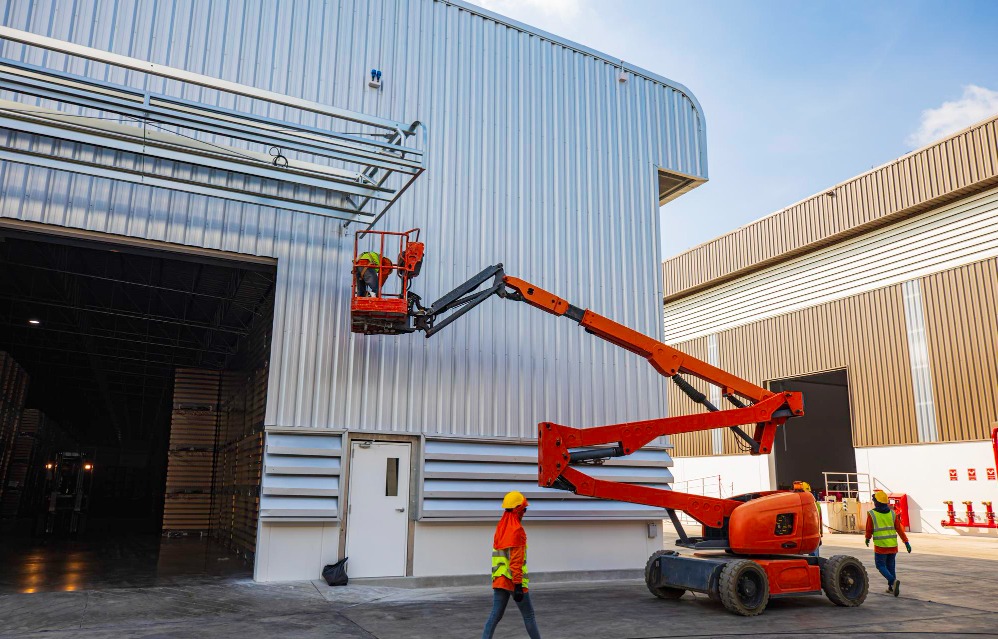
A lifter can serve many different purposes in manufacturing, warehousing, assembly, maintenance, and material-handling environments. Because the term covers a broad range of equipment, choosing a suitable unit requires a clear understanding of what needs to be lifted, how high it needs to move, and how the load must be positioned.
For industrial businesses in Meerut, defining these requirements before approaching a supplier can make equipment selection considerably more precise.
Define the Material First
Start by identifying the load.
Is the equipment intended for boxes, components, pallets, drums, machine parts, tooling, or another type of material?
Record:
- Load dimensions
- Typical weight
- Maximum weight
- Centre of gravity where relevant
- Contact points
- Required orientation
- Load stability
A lifter designed for one load type may not be appropriate for another even when the weight appears similar.
Determine the Movement Required
Not every lifting task involves simply moving an object upward.
Some processes require the load to be raised to a workstation. Others involve transferring components between machines, positioning goods for packing, or supporting maintenance activity.
Define the starting position, final position, lifting height, and any horizontal movement required.
This process description helps narrow the equipment category.
Consider Operator Interaction
Think about how employees currently perform the task.
If workers repeatedly bend, reach, reposition, or manually support awkward materials, the handling process deserves closer assessment.
Suitable lifting equipment can be evaluated as part of a broader ergonomic and material-flow review. Equipment selection should still follow relevant safety requirements and workplace procedures.
Measure the Working Area
Industrial equipment has to fit into the available space.
Measure doorways, aisles, machine clearances, workstations, floor areas, and turning zones. If the lifter needs to travel between departments, inspect the entire route.
A machine that fits the load but cannot move conveniently through the facility is not a practical solution.
Check Floor Conditions
Floor quality can affect mobile lifting equipment.
Uneven surfaces, gradients, damaged joints, or debris may influence operation. The suitability of the travel surface should therefore form part of the equipment assessment.
Define Usage Frequency
How often will the lifter operate?
Equipment used occasionally for maintenance has different requirements from a machine supporting repetitive production throughout a shift.
Frequency influences equipment configuration, maintenance planning, and the level of automation that may be justified.
Prepare Useful Information for a Supplier
A productive supplier discussion should begin with measured data.
Share the load weight, dimensions, lift height, movement pattern, operating frequency, floor conditions, and available space. Photographs or site measurements may also help clarify unusual applications where appropriate.
SS Quality Air Solutions works with industrial material-handling requirements where equipment needs to be selected around real site conditions.
Choosing a lifter should therefore begin with the task rather than the machine. Once the material, movement, height, frequency, workspace, and operating environment are understood, businesses can evaluate equipment that fits the process instead of adapting the process around an unsuitable purchase.