

The Best Fork lift for an industrial facility is the machine that fits its actual workload, space constraints, lift requirements, operating environment, and maintenance capabilities. Choosing solely by rated capacity or purchase price can overlook practical factors that become obvious only after the machine enters daily service.
For factories and warehouses in Muzaffarnagar, a structured evaluation can make equipment selection more dependable.
Define the Daily Job First
Before comparing models, document the work the forklift must perform.
A useful requirement sheet should include:
- Typical load weight
- Maximum expected load
- Pallet dimensions
- Required lift height
- Aisle width
- Daily travel distance
- Indoor or outdoor use
- Number of operating hours
- Floor conditions
- Loading dock requirements
This creates an objective basis for evaluating different options.
Look Beyond Maximum Capacity
A capacity figure should never be considered without understanding the manufacturer's specified operating conditions.
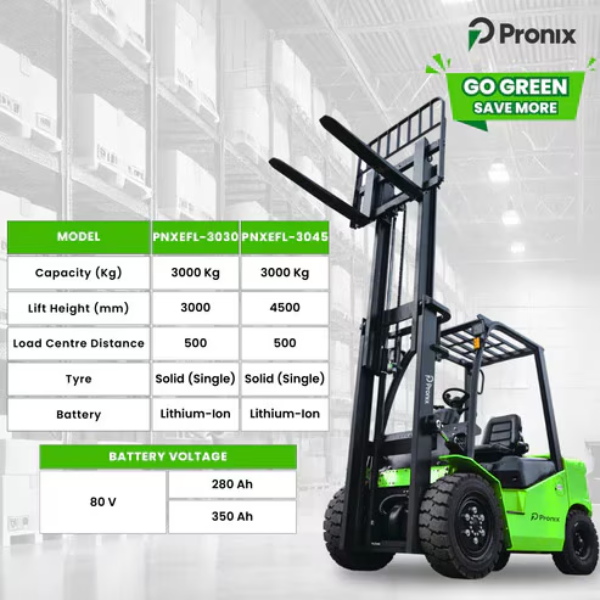
Load dimensions, load centre, lift height, mast configuration, and attachments can influence practical lifting capability.
Technical specifications should therefore be reviewed for the actual application.
Examine Manoeuvrability
Warehouse productivity depends partly on how efficiently equipment can move through the facility.
If aisles are narrow, turning requirements become important. If loads move through doorways, clearance must be measured. If the forklift regularly approaches trucks or docks, the loading area also needs evaluation.
Taking physical measurements before equipment selection can prevent expensive layout conflicts.
Consider the Power Requirement
Different power configurations suit different environments.
Electric equipment can be relevant to many indoor applications, but businesses need suitable charging infrastructure and an operating plan that accounts for battery requirements.
Other forklift configurations may be considered for different operating environments. The decision should reflect usage conditions rather than a general assumption that one power type suits every facility.
Check Service Requirements
Downtime can affect production, dispatch, and warehouse flow.
Before making a decision, ask what preventive maintenance the machine requires and how the facility will manage inspections, servicing, wear components, and operating records.
A lower initial purchase price may be less meaningful if equipment does not fit the facility's maintenance strategy.
Review Safety Conditions
Forklift selection cannot be separated from site safety.
Pedestrian movement, blind intersections, floor markings, rack layouts, loading zones, lighting, operator training, and local procedures all influence safe operation.
The equipment must fit within a wider material-handling system.
Use Site Conditions as the Final Test
A specification that looks suitable on paper should still be checked against actual operating conditions.
SS Quality Air Solutions can be considered by businesses assessing forklift requirements for industrial material movement.
The most useful buying decision is based on measurable requirements. Capacity matters, but so do lift height, aisle dimensions, operating hours, floor conditions, energy arrangements, service planning, and workflow.
When these factors are evaluated together, a business can narrow its options to equipment that genuinely suits its day-to-day material-handling demands.