

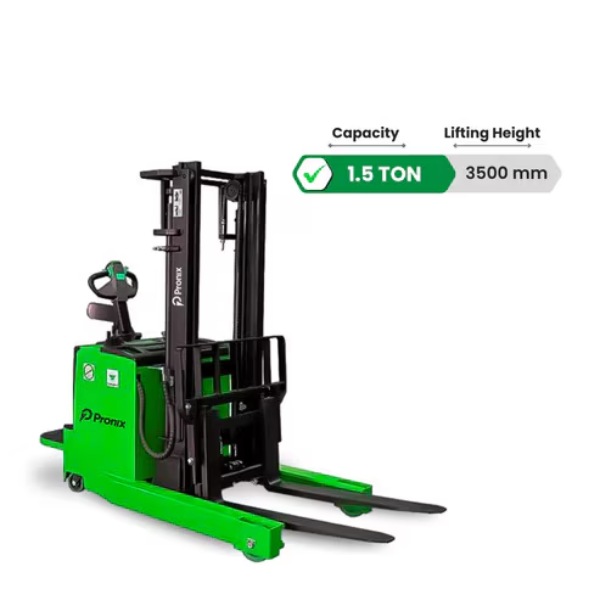
An Electric fork lift can be an effective material-handling option for many warehouses and industrial facilities, particularly where equipment operates predominantly indoors. However, electric power alone does not make a forklift suitable for every application. Businesses still need to evaluate load capacity, runtime, charging arrangements, aisle dimensions, lift height, and working conditions.
For warehouses in Roorkee, Uttarakhand, these considerations are useful when reviewing a new forklift requirement or replacing existing handling equipment.
Indoor Operation Is a Common Application
Electric forklifts are frequently considered for indoor material handling.
Their suitability depends on the specific machine and workplace, but they can support activities such as pallet movement, rack loading, production supply, finished-goods handling, and dispatch preparation.
The first question should still be whether the equipment dimensions and rated capabilities match the facility.
Charging Infrastructure Needs Planning
An electric forklift requires an appropriate charging arrangement.
Businesses should determine where charging will take place and whether the electrical infrastructure meets equipment requirements. The charging location should also fit site procedures and manufacturer recommendations.
For intensive operations, charging strategy becomes part of production planning rather than an afterthought.
Runtime Should Match the Shift Pattern
A warehouse operating for limited periods may have different energy requirements from a facility running several shifts.
Managers should examine:
- Daily operating hours
- Travel distance
- Lifting frequency
- Load intensity
- Break periods
- Charging opportunities
- Peak dispatch schedules
These factors help determine whether the planned equipment configuration can support the required workload.
Aisle Dimensions Remain Critical
Electric power does not solve space limitations.
Measure aisle widths, turning areas, rack clearances, doorways, lift heights, and loading zones before selecting equipment.
A compact machine may be advantageous in certain facilities, but actual manoeuvrability should be checked against the warehouse layout.
Floor Quality Influences Operation
Warehouse floors should support the intended equipment and load.
Uneven surfaces, damaged joints, debris, steep gradients, or unsuitable travel areas can affect material movement. Site inspection is therefore an important part of equipment evaluation.
Maintenance Is Still Necessary
Electric equipment still requires preventive maintenance.
Tyres, forks, brakes, steering systems, hydraulic components, electrical systems, battery condition, and other components need inspection according to manufacturer guidance.
Operators should also report unusual noises, warning indicators, changes in handling, or visible damage.
Compare the Whole Operating Requirement
Choosing electric equipment should be based on total operational suitability rather than one characteristic.
SS Quality Air Solutions works with industrial material-handling requirements where businesses need to match equipment to their warehouse conditions.
An electric forklift can be a practical option when its capacity, lift height, dimensions, energy system, runtime, and service requirements align with the facility.
For warehouse managers, the strongest evaluation starts with real operating data. Understanding how far the machine travels, how often it lifts, where it charges, what it carries, and how much space it has to manoeuvre provides a much clearer basis for deciding whether an electric forklift fits the job.