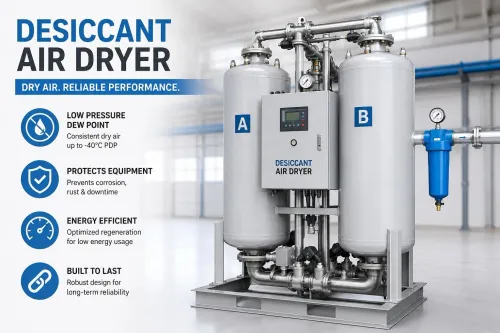



Not every compressed air application can operate with standard moisture control. Industries requiring extremely dry compressed air often depend on a Desiccant Air Dryer to achieve lower dew points and protect sensitive manufacturing processes.
Industrial facilities in Haridwar, particularly pharmaceutical manufacturers, electronics companies, food processing plants, and engineering industries, frequently evaluate desiccant dryers when moisture control becomes critical.
Understanding a Desiccant Air Dryer
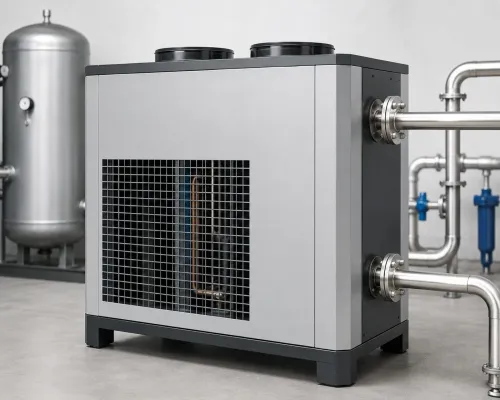
Unlike refrigerant dryers that cool compressed air, desiccant air dryers remove moisture by passing compressed air through a specialised drying material that absorbs water vapour.
This process enables significantly lower pressure dew points suitable for demanding industrial environments.
Applications Requiring Ultra-Dry Air
Industries commonly using desiccant dryers include:
- Pharmaceutical manufacturing
- Electronics production
- Chemical processing
- Instrumentation systems
- Food packaging
- Automotive painting
- Medical gas systems
- Precision engineering
These applications often require compressed air with extremely low moisture content.
Benefits of Using a Desiccant Air Dryer
Enhanced Equipment Protection
Dry air reduces corrosion and extends the life of valves, actuators, pneumatic cylinders, and production equipment.
Better Product Quality
Moisture-sensitive manufacturing processes benefit from consistent compressed air quality.
Reduced Downtime
Removing water vapour helps minimise equipment failures caused by internal corrosion or freezing.
Reliable Operation in Challenging Conditions
Desiccant dryers perform well where low ambient temperatures or demanding production environments require very dry compressed air.
Selecting the Right System
Before investing, businesses should consider:
- Required pressure dew point
- Airflow demand
- Compressor capacity
- Operating pressure
- Regeneration method
- Installation space
- Maintenance requirements
Selecting the correct dryer depends on production requirements rather than simply choosing the lowest dew point available.
Maintenance Requirements
To maintain reliable performance, regular servicing should include:
- Inspecting desiccant material.
- Replacing filters.
- Checking valves.
- Verifying regeneration cycles.
- Monitoring pressure drop.
- Inspecting drain systems.
Routine maintenance supports long-term efficiency.
Making an Informed Decision
Choosing between refrigerant and desiccant drying technologies depends on production processes, moisture tolerance, operating costs, and compressed air quality requirements. Businesses often seek technical guidance from experienced suppliers such as SS Quality Air Solutions to ensure the selected system aligns with current operations and future production needs.
A desiccant air dryer is an effective solution for industries where compressed air quality directly influences equipment reliability, production efficiency, and product consistency.